Summary
Stephen King’s epicThe Dark Towerseries has no shortage of memorable antagonists, but a change made in the revised and expanded edition ofThe Gunslingerhelped elevate one villain above all others.King’s long and storied fantasy seriesacts as the backbone of his connected universe, containing elements from many of his other novels and short stories. Perhaps the most important of these cross-over elements is the villains that Roland Deschain and his ka-tet encounter throughout the course of his journey across Mid-World.
Chief among those villains is The Man In Black, who acts as Roland’s primary foil inThe Gunslinger, and the impetus for his passage through the town of Tull early in the book. Roland does eventually catch The Man In Black, who reveals that he is only a pawn of Roland’s true enemy (the Crimson King) before seemingly dying and leaving his skeleton behind. However, one major change made in the revised and expanded version ofThe Gunslingerelevates The Man In Black as a villain in The Dark Tower series and in King’s connected literary universe.

Mike Flanagan’s The Dark Tower Show Needs At Least 5 Seasons To Adapt His Favorite Book In Stephen King’s Series
If horror guru Mike Flanagan wants to address his favorite book from King’s The Dark Tower series, his developing show will need to run a while.
Stephen King Made The Man In Black’s Fate More Uncertain In The Revised & Expanded Gunslinger
In the original version, his death was confirmed
In both versions ofThe Gunslinger, The Man In Black, otherwise known as Walter Padick, Walter O’Dim, The Walkin' Dude, and countless other names, puts Roland to sleep after their conversation. When Roland wakes, 10 years have passed, and there is nothing remaining of Walter but a skeleton.In the original version, Roland is certain that his foe has perished, and that the skeleton that was laid nearby was in fact Walter’s. He pulls the jawbone off the skeleton just as he did with the demon that he and Jake found in the Way Station, to ward against evil.
Roland’s coupling with the Demon Elemental disguised as an oracle inThe Gunslingeris how his son, Mordred, was eventually produced.

However, in the expanded and revised version ofThe Gunslinger, Roland speculates whether that is thetrue end of The Man In Black or if the skeleton is just another one of his many tricks. That left the door open for The Man In Black to return at another point in the epic story, and theoretically meant that he’s still pulling the strings on Roland’s journey. It’s a major change in the overall narrative ofThe Dark Tower, especially considering that Roland and his ka-tet encounter an eerily similar foe later on.
The Revised & Expanded Gunslinger Also Leaves Ambiguous That Walter/Man In Black, Marten Broadcloack, & Randall Flagg Are All The Same Person
As opposed to being similar, powerful antagonists
ThroughoutStephen King’s expansive literary universe, there areseveral villainous characters who bear similar traits and deal in similar brands of evil. King’s 1978 post-apocalyptic novelThe Standand his1984 fantasy novelThe Eyes of the Dragonboth involve a magician and master of deception named Randall Flagg (or just “Flagg”) who is established as the ultimate evil in each novel.The Gunslingerincludes flashbacks to Roland’s youth that detail how his father’s magician and adviser, Marten Broadcloak, seduced Roland’s mother as part of a plot to get Roland exiled.
While the original version ofThe Gunslingerpointed to the characters of Flagg and Broadcloak as separate people, the revised and expanded edition of the novel indicated that The Man In Black, Marten Broadcloak, and Randall Flagg were all the same person. While the name Flagg is never mentioned in either version ofThe Gunslinger, the revised and expanded version was changed slightly so that all mentions of Walter and Marten could plausibly point to them being the same person as Flagg. The fourth novel inThe Dark Towerseries,Wizard and Glass, confirms that to be the case.
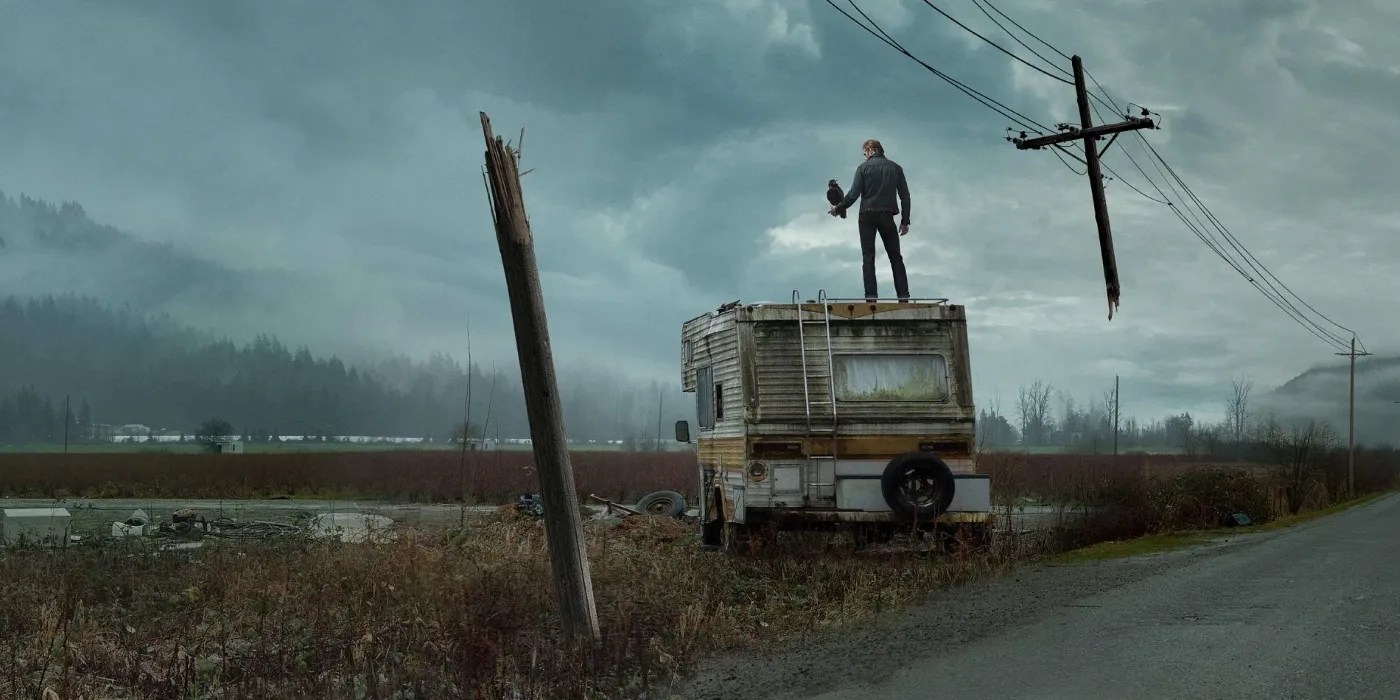
He truly becomes the central villain in Stephen King’s connected universe
The knowledge that Flagg, Walter, and Marten are all in fact the same person makes him a far more terrifying villain. Roland and other characters in Stephen King’s expanded multiverse encounter multiple powerful and evil magicians, which is intimidating in itself. However, knowing that Flagg, Walter, and Marten are all the same person makes that central villain so much more terrifying.He has the power to sew chaos and evil across multiple universes and across vast spans of years, and seems to be nigh indestructible, if not at least ageless.
Even more frightening is the fact thatFlagg seemed to have the ability to change his face. Flagg, Walter, and Marten all looked different enough to the point that Roland could not readily identify The Man In Black as Marten until it was confirmed. Flagg was also shown to have others in his employ or under his influence, like the priest Jack Mort who pushed Jake Chambers in front of the car that killed him and sent him to Mid-World in the first place. A shape-shifting, ageless, multiversal magician is about as intimidating a villain as there is in literature.
All The Dark Tower Novels And Tie-Ins In Order
1998
1982
1987
1991
The Dark Tower IV: Wizard and Glass
1997
2012
2003
2004
The Dark Tower VII: The Dark Tower
Flagg may have been a pawn of the Crimson King, but he was also ambitious in addition to powerful, making him even more dangerous.He had intended to double-cross the Crimson Kingand take over the Dark Tower himself, essentially becoming a god in the process. That would have been in line with his well-established character as a trickster and deceiver, but Stephen King, in a much-maligned decision, had him meet his end at the hands of Roland’s demon-born Were-Spider son, Mordred.
The Gunslinger Revisions Also Retroactively Make The Man In Black/Walter/Marten A Greater Villain
Each becomes a different face for a greater evil
The reveal that Randall Flagg, Marten Broadcloak, and Walter O’Dim are all the same person retroactively makes The Man In Black fromThe Gunslingeran even better villain. As opposed to being a one-off villain who was simply an obstacle for Roland to chase down and overcome on the path of his greater journey towardsThe Dark Tower,The Man In Black becomes one of the faces of Flagg, and the entirety ofThe Gunslingerbecomes a story about how Roland was still being manipulated by the same person who tormented him as a young man.
As opposed to Marten, Walter, and Flagg being villains in the story ofThe Dark Tower, they become the key villain of the entire connected Stephen King multiverse. While The Crimson King may be the final boss that Roland has to face on his quest, it was in fact Randall Flagg who was the most significant evil influence on his life.The fingerprints of Flagg’s foul deeds are found throughout Stephen King’s novels, making him the true villain for Roland’s ka-tet. That makes The Man In Black so much more influential, and generally elevatesThe Gunslingeras a novel.
